Social Media Trends May 2026: What Brands Need to Know
May didn't slow down.
Audemars Piguet went on sale at Swatch and the queues went round the block. The World Cup turned into an entertainment machine. AI stopped waiting to be asked. And the culture quietly fell out of love with the grind.
The brands winning right now aren't the loudest, but the fastest to move with shifting momentum.
Here's what shaped social media marketing in May 2026, and what to act on next.

The Platform Updates Reshaping Visibility in May 2026
May's platform changes share one direction. Discovery and commerce are collapsing into the same surface. The feed is now the shop, the search bar and the booking engine.
On TikTok: TikTok GO launched in the US. People can now discover and book hotels, tours and local experiences inside the app. TikTok is a travel agent now. TikTok Shop is expanding across more EU markets. A £3.99 ad-free subscription is rolling out in the UK, the first sign TikTok is hedging its own ad model.
On Instagram: Captions are being tested on individual carousel images, turning a swipe into step-by-step storytelling. Instants launched. A BeReal-style feature for unfiltered, disappearing everyday moments.
On Facebook: Meta is building AI agents that complete tasks like shopping on a user's behalf through conversational prompts. Forum launched. A Reddit-style app built around topic-based communities and conversation.
On YouTube: A new growth playbook leans on creator partnerships, audience insights and audience-first storytelling. Google is wiring in shopping-intent signals through a partnership with Albertsons Media Collective for sharper targeting.
Visibility is getting more buyable, and more competitive. Luxury learned the hard version of this in May. It no longer competes with other luxury. It competes with everything else on the feed. Hi-fi craft alone does not hold attention. The brands that hold it pair polish with creator-led content and keep storytelling at the centre.
Instagram Instants
How Social Media Audiences Are Rejecting Hustle Culture
The grindset finally wore people down. The audience still wants to improve. It just refuses to burn out doing it.
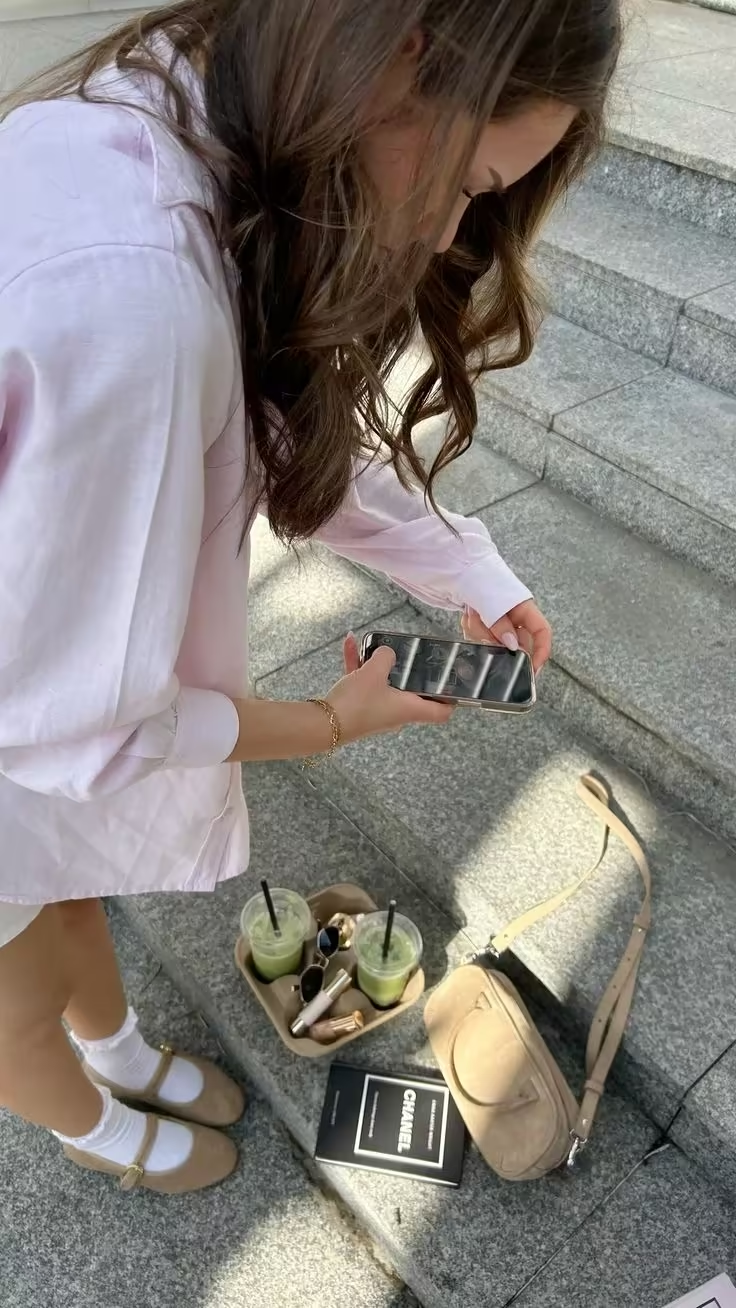
Consumers are rejecting hyper-performance messaging, grindset language and aggressive motivation. The backlash around Diary of a CEO, after Steven Bartlett explained how one night of drinking "ruined three days of his life", is exactly the tone people are done with.
What's performing instead: Realistic routines. Sustainable habits. Low-pressure fitness. Slow mornings and solo activities. Emotional honesty over hype.
The shift is from "be the best version of yourself" to "feel a bit better, consistently". Out with the try-hards. In with "at least I'm trying". If your brand tone still shouts, it already sounds dated.
How Social Media Creators Are Changing Content Style
Cinematic creators are stepping back from heavily polished edits. Talking-head videos, one-shot setups, BTS breakdowns and UGC-style storytelling are taking over.
This is not a drop in quality. It's a drop in friction. Creators like OMGADRIAN still bring the visual eye, but the formats are faster, more personal and easier to keep up. Lighter setups, mobile workflows, AI-assisted tools and quicker systems do the heavy lifting.
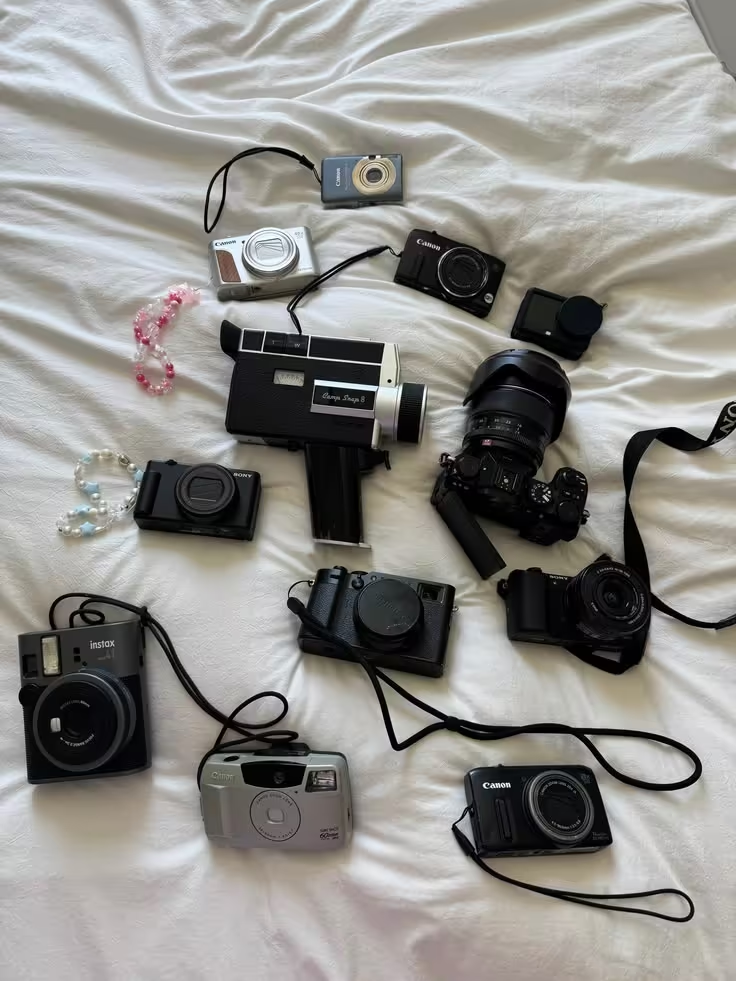
It explains the comeback of compact cameras. The Ricoh GR, Fujifilm X100 and Canon G7X are back in demand because they make high-quality content feel spontaneous and accessible.
The standard moved from "perfectly produced" to "high-quality, low-friction". Considered, but fast, adaptable and native to the platform.
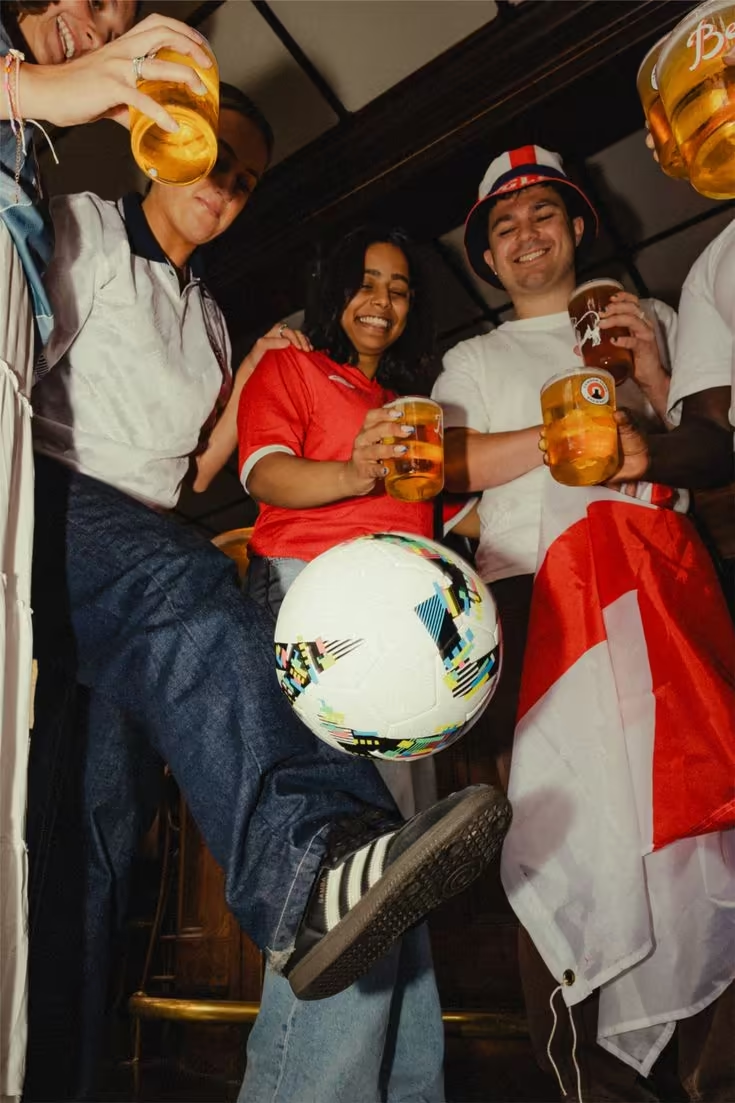
The Super Bowl-ification of the World Cup
America treats sport as entertainment. Halftime shows. An advert in every break. The 2026 World Cup is being built the same way: cinematic, celebrity-driven, creator-heavy and commercial. FIFA even added a halftime show to the final, unthinkable a tournament ago.
World Cup marketing used to run on footballers, national pride and nostalgia. This one runs on musicians, actors, streamers and fashion figures. The brand films have already started, and they read like cinema.
Adidas cast Timothée Chalamet and Bad Bunny in Super Bowl-style, narrative-led spots, tapping the nostalgia of playing football in the street. Is it an ad or a short film?
Nike skipped the single TV spot for a "World Cup Cast" of athletes, musicians and fashion leaders, plus a Nike x Palace drop and "tunnel-fits" content of players arriving at stadiums.
Lays and Walkers put Steve Carell front and centre.
Two directions. Both celebrity-led. Both built for the feed, not the final whistle.
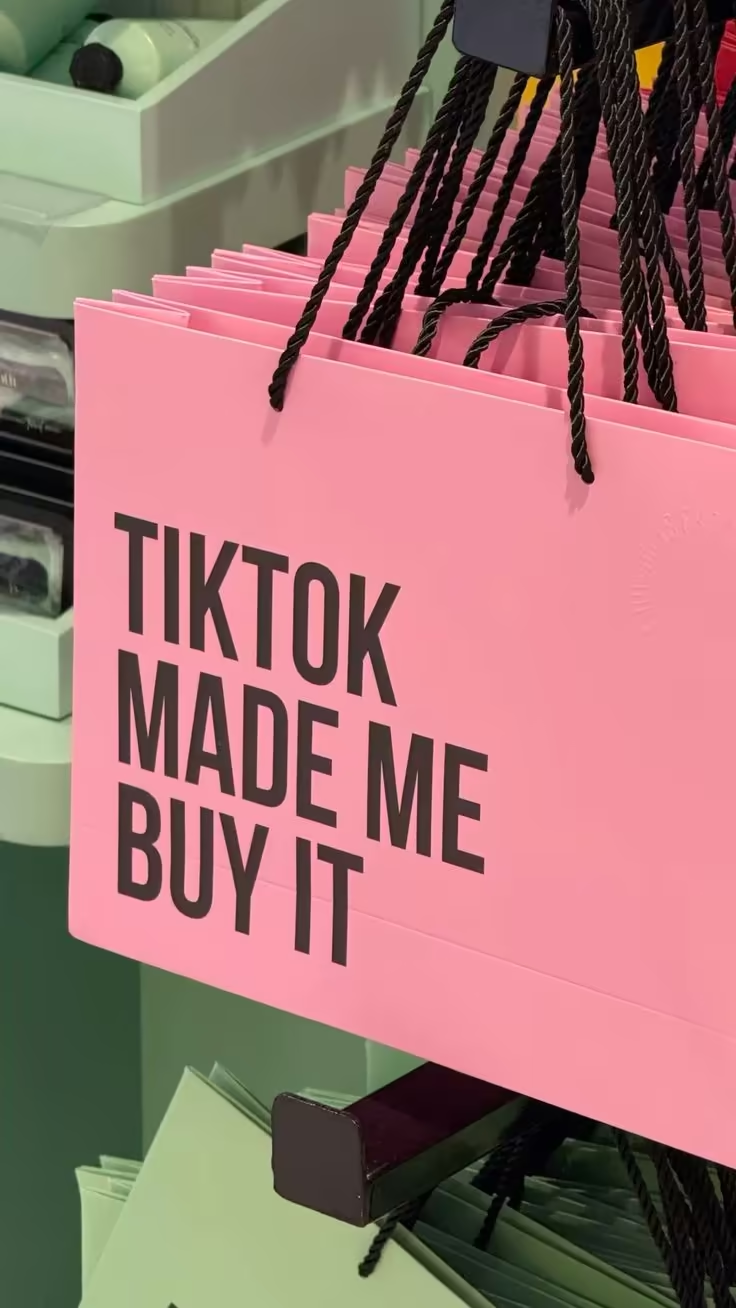
How TikTok Shop Is Changing Social Media Commerce in 2026
TikTok Shop turned social media into a checkout. The numbers are hard to argue with.
58% of TikTok users have made a purchase through TikTok Shop. 55% have bought from a brand after discovering it on TikTok. 50% have purchased after watching a TikTok Live. 71.2% buy when they find a product organically in their feed. TikTok's brand value hit $84.2bn in 2024, up from $65.7bn in 2023.
Little Moons is the case study everyone cites, with a reported 1,300% sales jump after TikTok-driven exposure. Fashion, Beauty and Personal Care, and Home and Living drive the most sales.
Discovery, recommendation, review and checkout now happen in one place. Creator influence, social proof and frictionless buying have made TikTok one of the most powerful commerce engines in social.
The Best Brand Collaborations on Social Media in May 2026
Three collabs in May show where the partnership economy is heading. Less logo-on-logo. More cultural event.
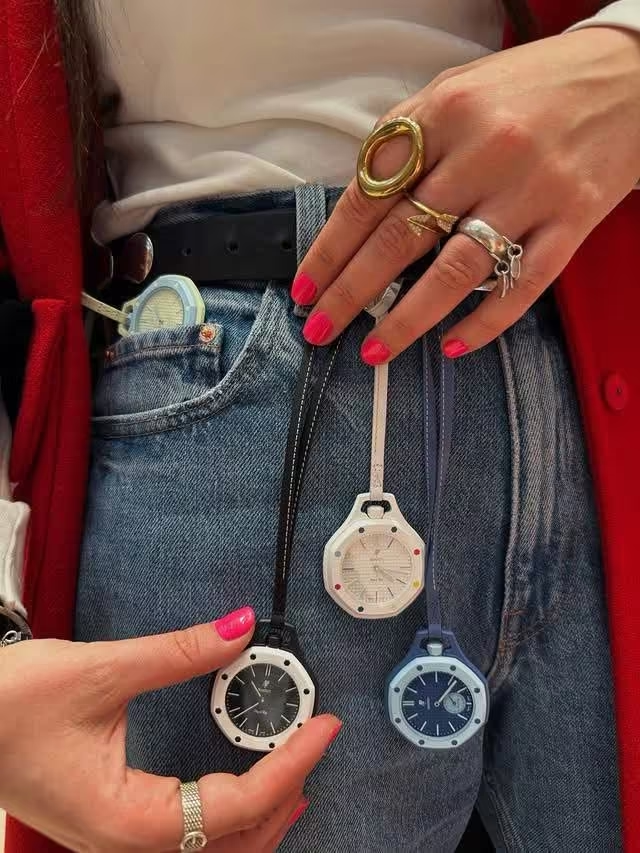
Audemars Piguet x Swatch "Royal Pop". Haute horlogerie sold at Swatch prices, from around $400. The high-meets-low drop caused queues and mayhem from Paris to Kuala Lumpur. Scarcity plus accessibility is a frenzy machine.
Liquid Death x Pop-Tarts "Carnage". A Frosted Strawberry iced tea in a heavy-metal can, engineered for memes from launch. Two loud brands, one absurd product, total feed dominance.
Isabel Marant x Havaianas. Parisian fashion meets the Brazilian flip-flop. A limited drop that sold out fast and turned the cheapest shoe in the house into a status item.
The pattern? Collabs are mini-launches now, each with its own creative world, not co-branded SKUs slapped together.
The Moments That Earned Their Reach
Two activations proved experiential still beats the algorithm when it's built properly.
Columbia Hike Society's HikeFest sent hundreds of people across the Peak District on foot to earn a "rave in a cave". The venue was Peak Cavern, known locally as the Devil's Arse, headlined by Duskus with the cave's own acoustics folded into the set. No signal, no phones, no shortcut. Columbia positioned itself as a brand that creates the outdoors, not just kits it out.
Magnum took over Cannes with Maison Magnum, its first-ever fashion show, curated by Law Roach as "Taste Architect" and closed by Heidi Klum. After the success of its Coachella activation, Magnum is no longer an ice cream brand. It's a lifestyle one.
Both earned their attention. Neither needed a media budget to be noticed.
How AI Agents Are Changing Marketing in 2026
May was the month agents went from demo to default.
Google launched Gemini Spark, a 24/7 assistant that runs tasks in the background. OpenAI stood up a $4bn Deployment Company to embed engineers inside businesses. Bots that act without being prompted are the standard now, and speed is the new currency.
The Likeness Wars Began: Your face is now intellectual property. Taylor Swift and Matthew McConaughey trademarked their voices and likenesses. Scarlett Johansson and Cate Blanchett fronted a "Stealing Isn't Innovation" campaign. YouTube opened deepfake detection to Hollywood. Likeness is the next rights battle, and it touches every talent and influencer deal we sign.
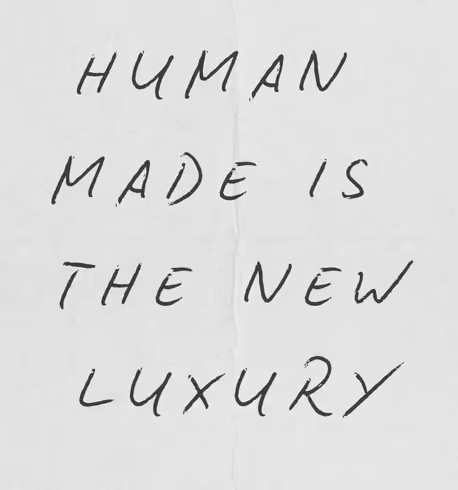
Prove a Human Made It: A Commonwealth Short Story Prize winner was accused of using AI, and a detector flagged the text as 100% machine-made. The "prove a human made this" era has officially started.
Every Prompt Is Discoverable: OpenAI was hit with a class action alleging it leaked ChatGPT data to Meta and Google. One app exposed 300 million messages. A CEO's chat logs surfaced inside a court case over a $250m deal. Assume everything typed into AI can be read back to you, and brief teams accordingly.
Music Clearance Gets Complicated: The labels stopped suing and started licensing. Warner and Universal settled with Suno and Udio to build walled-garden AI music. Sony is the last major still fighting, with a fair-use hearing in July that could set the precedent. Clearing music for content is about to get harder.
AI Got Political: Seven in ten Americans now oppose data centres being built near them. More than 70 projects were blocked or restricted in four months, with around $64bn stalled. Left and right agree for once. AI just became a local planning fight.
So What Should Brands Do in June 2026?
June is louder than May. The World Cup kicks off. SpaceX targets a record listing. Ads push deeper into AI search. Five shifts to act on now.
Build to be found, not just to go viral. Roughly 60% of searches now end without a click. Educational, answer-led content out-earns trend-chasing over time. Make fewer posts designed to trend and more designed to be found.
Move in real time. The World Cup becomes the internet's main feed. The winners will be the fastest and most culturally aware participants, not the loudest brands.
Sell the moment, not the product. Summer lifestyle is overtaking product marketing. Even non-travel brands will borrow the European-summer aesthetic of escape, ease and slow living.
Put your people on camera. Behind-the-scenes is becoming front-of-house. Team stories, founder perspectives and event prep beat polished brand films on engagement.
Treat likeness and provenance as infrastructure. Lock down faces and voices. Assume every prompt is discoverable. Build both into talent deals and content briefs now.
May rewarded brands that read the room the quickest. June will reward the same instinct, louder.
Want the full breakdown? Download our May 2026 Social Media Marketing Trends Whitepaper to explore every platform update, trend and shift shaping the year ahead.
Ready to make noise?
We're the agency challenger brands call when growth is non-negotiable.