Social Media Trends April 2026: What Brands Need to Know
April 2026 wasn't quiet.
A new ad platform launched. A leading AI video model died. Hollywood became a marketing channel. The brands winning right now aren't the loudest — they're the most intentional.
Here's what shaped social media marketing in April 2026, and what to act on next.
The Platform Updates Reshaping Visibility in April 2026
Across TikTok, Instagram, Facebook and YouTube, April brought updates that change how brands surface, sell and get seen. Not cosmetic tweaks. Structural shifts in social media discoverability.
On TikTok: Logo Takeovers — co-branded placements when users open the app. Prime Time — a series of ads inside a limited time frame. Top Reach — one day of maximised reach in a single offering.
On Instagram: Comment editing is now live. Users can edit comments within a 15-minute window after posting. Instagram Plus, a paid subscription tier, is in test in Mexico, Japan and the Philippines.
On Facebook: Meta AI Business Assistant is rolling out across the US, EMEA, APAC and LATAM with local-language support. Reels Trending Ads are aligning to Fashion Week, F1 and Black Friday.
On YouTube: AI Search Mode is expanding to YouTube Premium. Interactive results inside queries. Shopping intent signals via Albertsons Media Collective unlock more precise audience targeting.
The takeaway? Visibility is getting more competitive, and more buyable. Platform-native social media strategy matters more than ever. Each algorithm is now tied to a different surface: search, shop, recommendation, paid.
Hollywood Is the New Marketing Platform
Product placement isn't placement anymore. It's full integration.
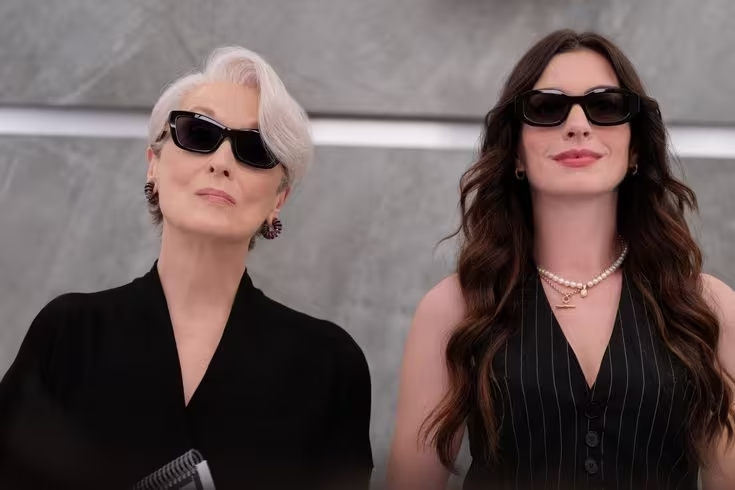
The Devil Wears Prada 2 is being treated like a brand platform. Fashion, beauty, tech and food brands are being built into the world, not dropped into scenes. TRESemmé, Diet Coke, Lancôme, Aero, Grey Goose and Starbucks all activated around the film.
Multi-brand collabs are driving hype cycles. Beauty drops, fashion capsules, co-branded products and limited editions launching around the same cultural moments.
Marketing has gone stunt-led and social-first. Pop-ups, immersive experiences and viral moments matter as much as the trailer.
Nostalgia is doing the heavy lifting. Legacy IP gives brands instant cultural relevance. A shortcut into conversation.
The films winning aren't just being watched. They're brand accelerating platforms.
ChatGPT Ads Manager: A New Ad Platform Just Opened
OpenAI launched its self-serve ChatGPT Ads Manager on April 15. ChatGPT is now a real ad platform you can log into.
Minimum spend dropped from $250K to $50K in two months. CPMs are sitting around $60. CPCs are $3 to $5. Ads run on the Free and the new Go tier only.
The targeting model is different. No demos. No interests. No lookalikes. The new mechanic is "context hints": plain-language descriptions of when your ad should appear. Closer to a creative brief than an audience build.
600+ brands are already in. Target, Ford, Adobe, Expedia, Williams-Sonoma. The pilot hit $100M annualised in six weeks. OpenAI forecasts $2.5bn in 2026 and $100bn by 2030.
The agencies that win here will write copy, not media plans. Test it before clients ask.
The TikTok Trends Defining April
Four formats dominated TikTok this month. They share a pattern: short text overlay, sharp visual hook, instant emotional read. The brands that adapted fast felt native, not bandwagon.
Justin Bieber 'Hallelujah' — a short list of life wins, each line followed by "hallelujah." Used by beauty and indie retail brands to celebrate small product or business moments.
Top Five Horror Movies — reframes everyday icks as horror titles. Self-deprecating, niche-led, instantly screenshot-able. Travel and lifestyle brands turned client gripes into the joke.
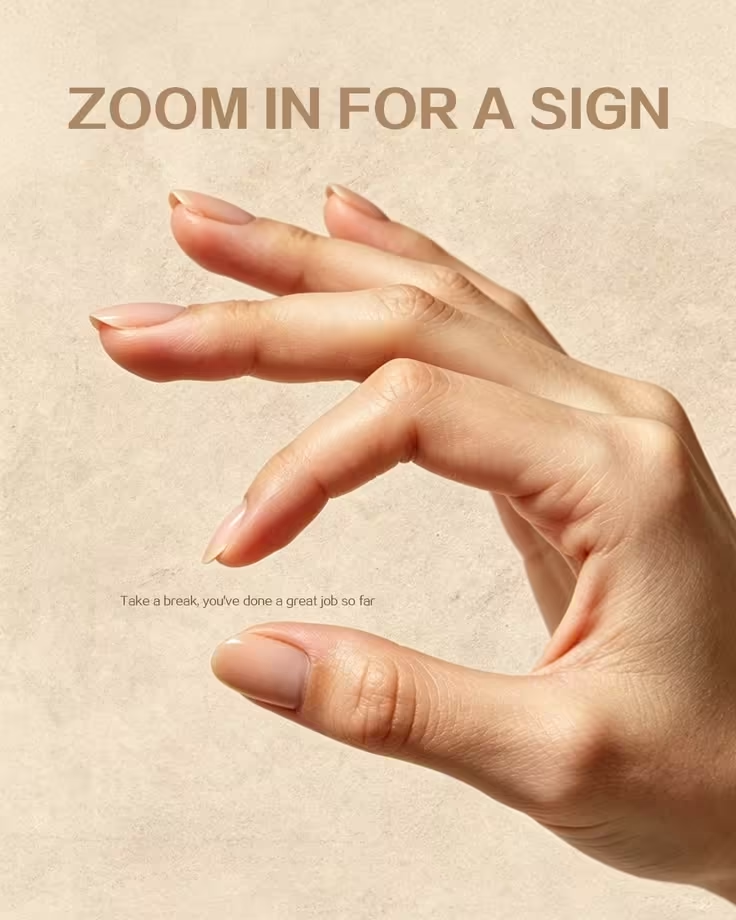
Zoom In For a Sign — a tiny in-frame element rewards anyone who pinches to zoom. A way to tease product, codes or call-outs without heavy copy.
I Have a Crazy Theory — POV-style philosophy. "If you do X, your day will be good." Brands are using it to attach themselves to a mood, not a feature.
Across all four, the same playbook. Lo-fi shooting. Fast captions. No production polish. The messy content era is still doing the heavy lifting on TikTok.
The Brand Collabs Worth Studying
Six collabs landed in April that show how the partnership economy is evolving. Less logo-on-logo. More world-building.
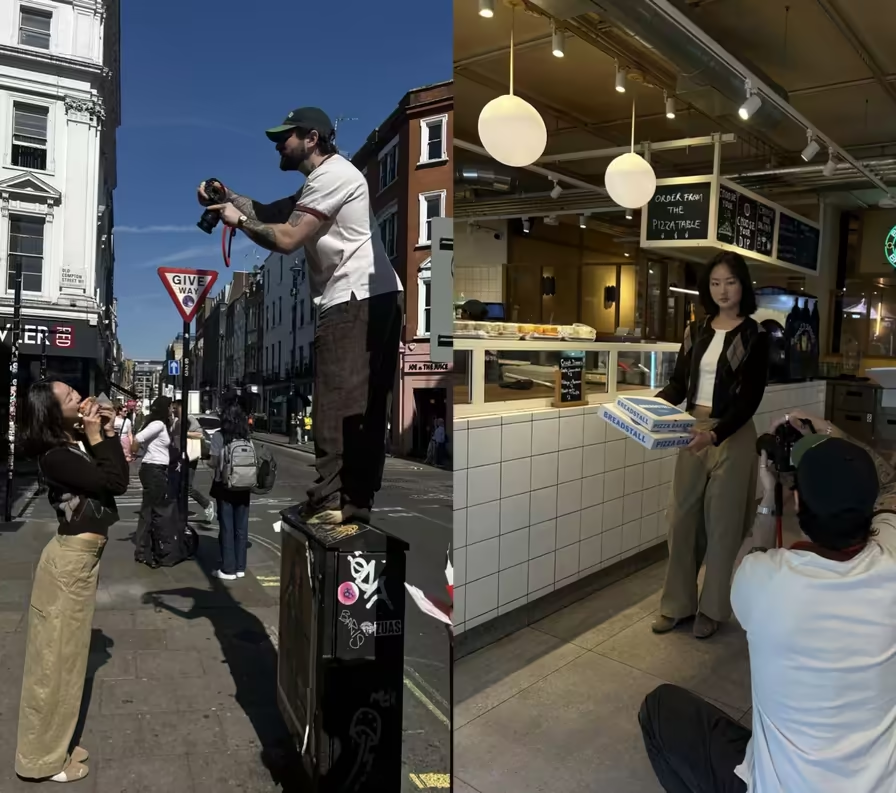
Maya Jama (Sproud) x Joe & The Juice — celebrity-founder energy meets a category challenger. Marketed as a drop, not a campaign.
Mulberry x British Pasture Leather — heritage craft positioned as innovation. Sustainability told through process, not slogans.
Burt's Bees x Grillo's Pickles Lip Balm — the unexpected food x beauty crossover, engineered for memes from launch.
GAP x Victoria Beckham — cultural credibility loaned to a heritage brand, with a fashion-week-style press moment.
McDonald's x Susan Alexandra — fast food meets indie design. Collectibles aimed squarely at Gen Z social.
Nahmias x Formula 1 — streetwear pulled into one of the fastest-growing sports IPs in the world.
The pattern? Collabs are being treated as mini-launches with their own creative system, not co-branded SKUs slapped together.

AI Is Splitting Marketing Into Two Playbooks
April was the month AI in social marketing stopped being theoretical. Here's what shifted.
The Sora Shutdown: OpenAI killed Sora on April 26. The numbers are jaw-dropping. It was burning $15M a day and had generated only $2.1M in lifetime revenue. Veo 3.1 is now effectively unchallenged as the leading AI video model. Google dropped Veo 3.1 Lite to $0.05 per second of video. A 30-second hero asset now costs $1.50 in compute.
AI x Creative Production: Luma launched Luma Agents, powered by their Uni-1 model — audio, video, image, language and spatial reasoning in one. Adidas and Mazda are already using it for end-to-end ad generation from a short brief plus a product image. Adobe, NVIDIA and WPP all announced agentic creative production at scale. WPP plugged Google Earth AI into its platform. Campaigns can now factor in real-world geographic and physical data for targeting.
AI Causing a Massive Shift in Paid: Instagram's native affiliate link rollout, plus a publicly reported "collapse of follower count as a meaningful casting metric," is reframing how the industry casts. Engagement quality and conversion now matter more than reach. Sol de Janeiro is increasing ad spend specifically to target non-followers, treating their owned audience as already converted. Indicative of a wider shift. AI agents are pushing brands to spend bigger on cold audiences rather than retargeting.
AI in Beauty and Retail: Ulta Beauty x Google Gemini launched "Ulta AI" inside Google Search's AI mode. Products are now shoppable in-chat — effectively the first big retailer to make their PDP buyable inside an AI surface. Fenty launched an AI Advisor on WhatsApp. MAC Cosmetics launched on TikTok Shop. TikTok Shop hit 60% YoY growth and became the UK's 4th largest beauty retailer in April.
AI Love and Hate: Aerie, Equinox and Almond Breeze ran April campaigns explicitly calling out "AI slop" and positioning themselves as the human, real, made-by-people antidote. 52% of consumers reduce engagement when they suspect content is AI-generated. 77% of marketers believe AI crafts emotionally resonant content. Only 33% of consumers agree. Mango ran the opposite play — a full AI-generated campaign for a teen capsule. Two opposing playbooks, same category. The next 12 months will tell us which one wins.
April Fools Done Right
April 1 is now a real cultural moment for brands. A sandbox for executions you couldn't get past legal any other day.
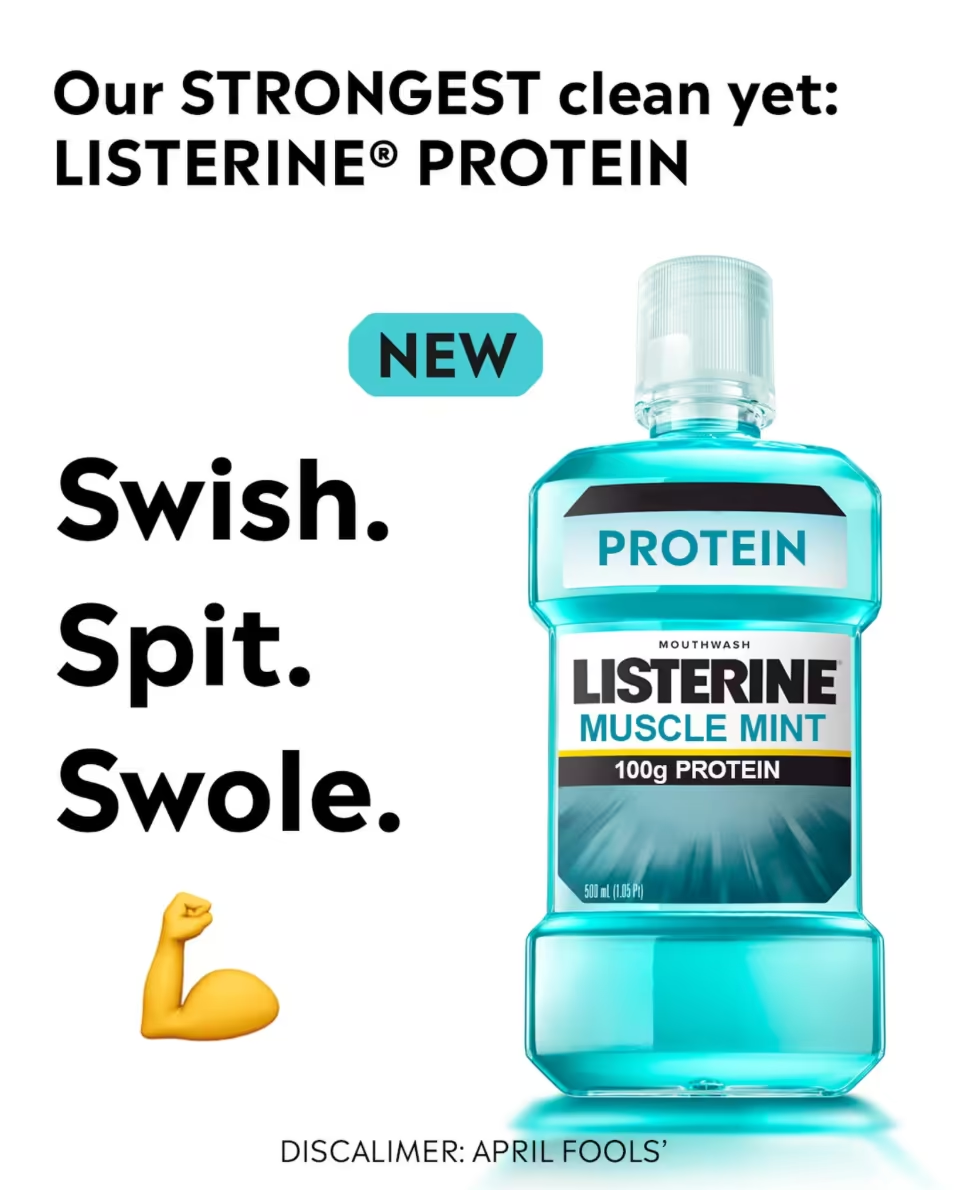
The standout stunts in April 2026: LIDL: lingerie capsule. Heinz: matcha-flavoured ketchup. Dyson: pet Dyson Airwrap. IKEA x Chupa Chups: meatball-flavoured lollipop. Doritos: Cool Ranch body wash. Listerine: protein mouthwash.
The ones that broke through weren't the funniest. They were the ones that committed hardest to the bit. Fully art-directed, fully merchandised, fully social-rolled. Half-jokes get scrolled past.
So What Should Brands Do in May 2026?
Here are five shifts to act on now, if you want to use social media to get ahead of competitors.
Build EGC into the mix. Employee-generated content is becoming a powerful engine. Audiences trust people more than brands, and platforms boost personal profiles in organic.
Use AI as the production engine, humans as the moat. Scale with AI, but lead with real creators, real product and real craft. Authenticity is now a competitive advantage, not a default.
Treat product placement as a primary channel. In the age of ad-skipping and algorithm fatigue, the best advertising doesn't feel like advertising.
Prioritise micro-communities over mass reach. Nearly 40% of consumers trust community recommendations as much as personal ones. Relevance is beating volume.
Plan for the death of the click. 60% of searches now end without one. Traffic-to-site KPIs are being replaced by visibility, citations and answer-engine presence as the new measure of discovery.
Want the full breakdown? Download our April Social Media Marketing Trends 2026 Whitepaper Deck to explore every insight, example and shift shaping the year ahead.
Ready to make noise?
We're the agency challenger brands call when growth is non-negotiable.