Meet Pixel: the system behind the work at Noise Media
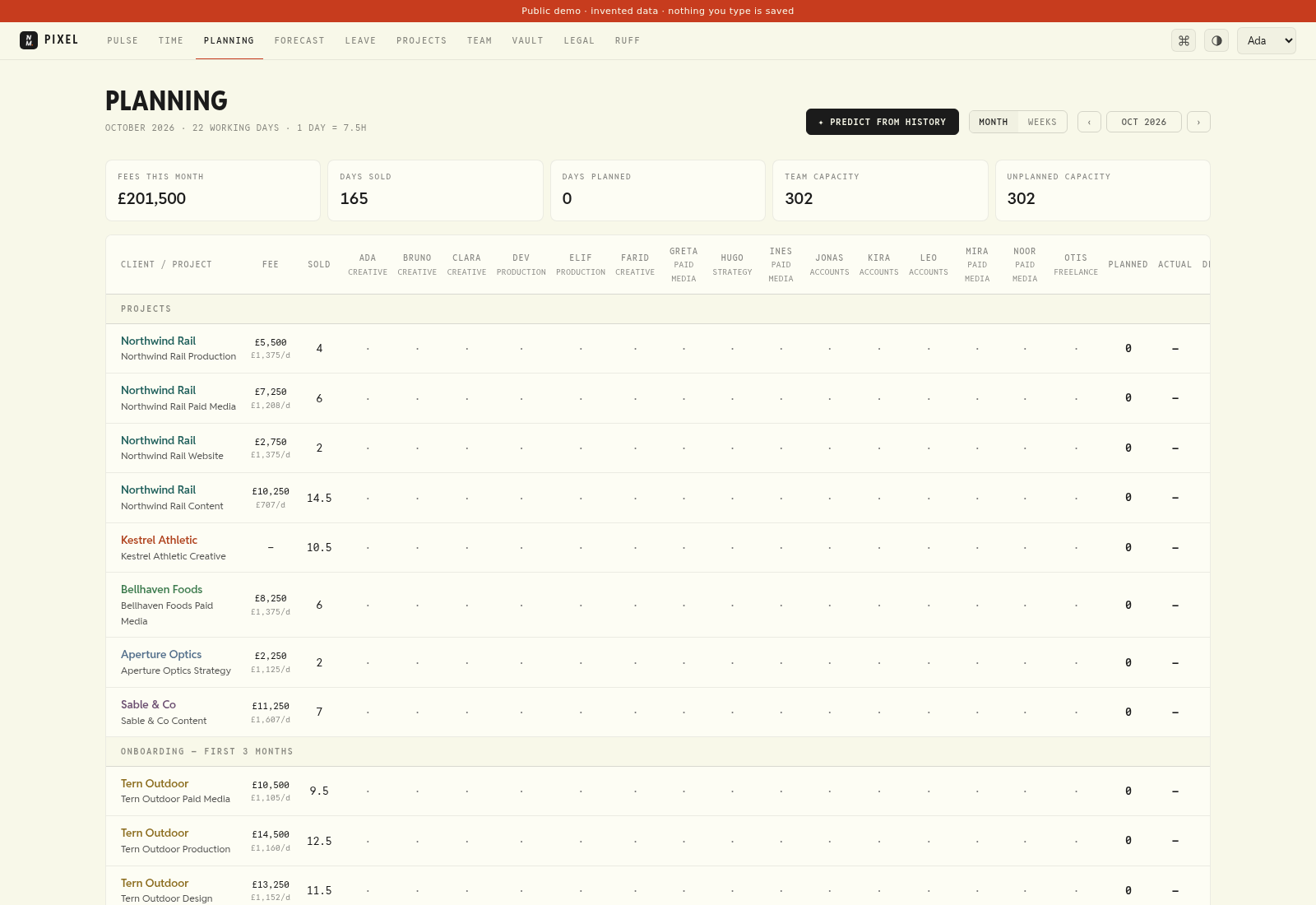
Who has room for the next brief? What is already committed? Where is the time going? These questions run through an agency day, connecting the people planning work with the people delivering it. Noise Media Group built Pixel, its in-house agency-operations system, around those questions. It gives the team a shared place to understand commitments, organise delivery and use what happens on a project to inform the next decision.
That starts in Planning, where work allocations sit alongside available team capacity, including leave. A deadline is easier to assess when the people responsible have a realistic amount of time to meet it. Take a hypothetical design brief: one person already has a full week, while another has room. Seeing those commitments together supports a conversation about moving the work, checking the skills needed and agreeing the handover. The allocation becomes a decision the team can understand, with availability considered before another promise is made.
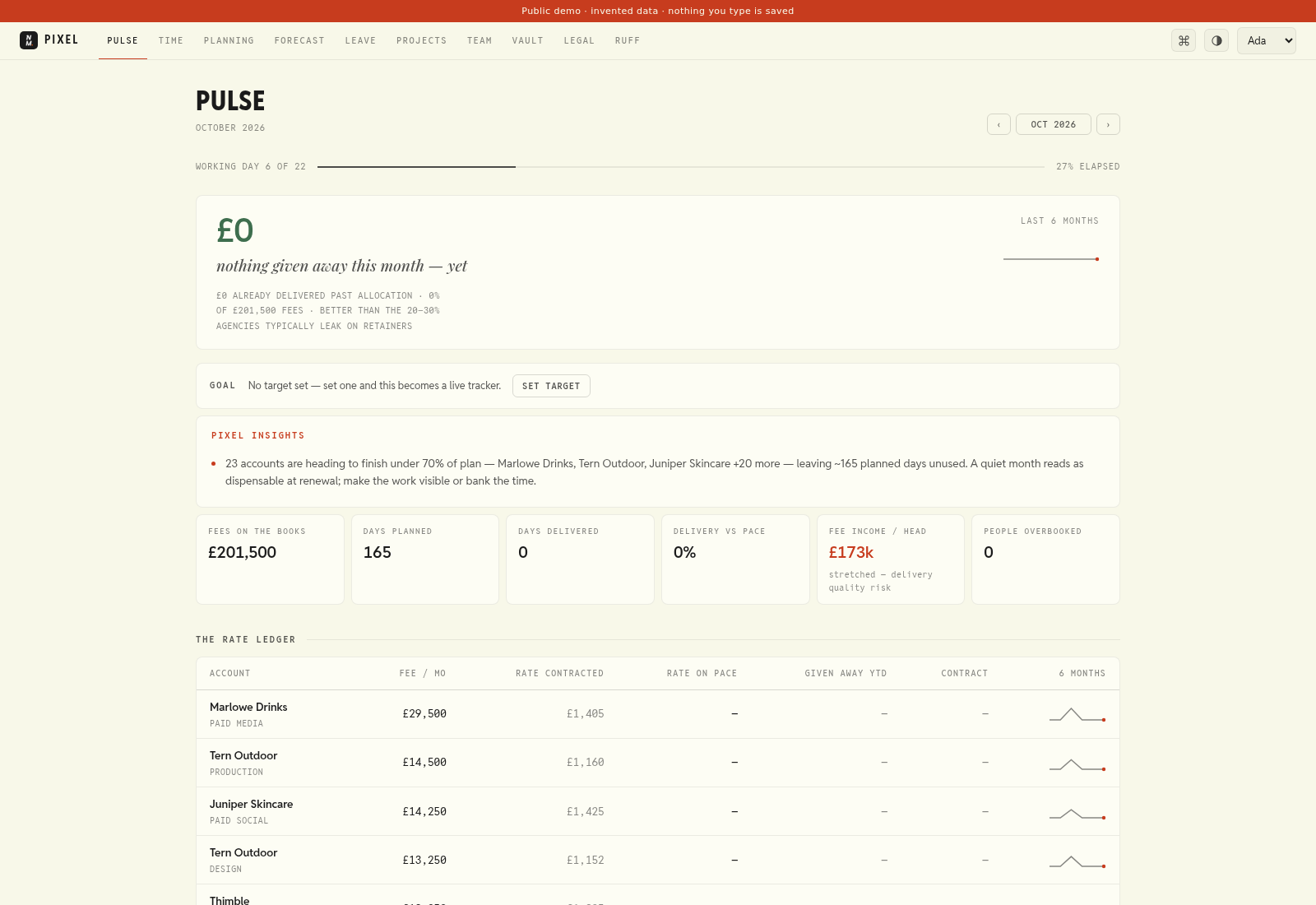
Once work begins, the picture develops. Time tracking connects with Clients and Pulse so planned work and logged time can be read together. If a project is taking more time than expected, that creates a useful question: has the scope changed, are revisions growing, or did the original allocation need more room? Pacing and effective rates help inform that discussion. They provide an operational view of how time is being used, giving the team a basis for reviewing workload, expectations and the next stage of delivery.
For the person doing the work, Ruff brings that shared picture down to the task in front of them. They can see their own work and client boards, with owners, deadlines, comments and status keeping the context close. A task moves from assigned to in progress, then to done, with discussion attached along the way. The next person can see where it stands and what needs to happen. Leave requests and approvals sit within the same working day, helping the team keep availability and commitments aligned as plans change.
The next layer is helping people interpret what they see. Pixel's intended role for AI-assisted analysis is to explain signals and suggest where someone should look more closely. A difference between planned and logged time, for example, can prompt an investigation into what changed. The direction includes brief and chat support, alongside permitted, reversible actions with a record of what happened. Human judgement remains central: the team brings the context, weighs the suggestion and decides what happens next.
Pixel is being shaped around Noise Media and the people doing the work. Its development follows the practical questions that surface between a brief arriving and a project closing, with each stage informing how the next one is planned.
"What I wanted was for everyone to see the same picture. Planning, time and tasks sit together, so nobody has to ask where things are at, and we can talk about the work instead of the admin around it."
— Obenewa Adu, Account Executive, AI & Automation, Noise Media Group
Images
Want results like this?
Talk to us about your brand and we'll be in touch within 24 hours.
Start a Conversation